


Prescription drug detox
Prescription drug detox is the medical stage of treatment for dependence on benzodiazepines, sleeping tablets and opioid painkillers. We run it as an inpatient programme only, under medical supervision, with a nurse and a paramedic on site around the clock, at a centre outside Warsaw in Poland. It is not a matter of stopping the medication, but of reducing the dose in a controlled way, all the way to zero. How long that takes depends on the starting dose and how long the drug was taken: usually 14 to 28 nights, and 42 where doses are high or dependence is mixed.
admission usually the same day
What prescription drug detox involves
Dependence on prescribed medication develops both through use exactly as directed and through use beyond what was prescribed. Long-term use produces tolerance and physical dependence, and lowering the dose or stopping abruptly brings on a withdrawal syndrome. Medication detox means doing that reduction under observation, with the symptoms monitored and treated where treatment is indicated.
One thing separates it from alcohol or drug detoxification: here the substance is not withdrawn. With alcohol and most illicit drugs the patient stops on the day of admission and the work is to carry them through withdrawal. With sedatives and sleeping tablets, stopping abruptly is itself the danger, so the medication stays and the dose comes down on a set schedule, often after switching to a longer-acting preparation.
Prescription drug withdrawal symptoms
Symptoms depend on the class of drug, the dose, how long it was taken and general health. Benzodiazepine withdrawal is the most fully documented and the most dangerous, so we set it out in two parts, because that is how people look for it.
Physical symptoms of benzodiazepine withdrawal
Muscle tremor. Sweating and chills. Nausea, vomiting or diarrhoea. Flu-like symptoms. Muscle pain. Raised heart rate and fluctuating blood pressure. Heightened sensitivity to sound, light and touch. Paraesthesia, meaning tingling and numbness.
Psychological symptoms of benzodiazepine withdrawal
Severe anxiety, often worse than the anxiety the drug was prescribed for. Agitation and irritability. Insomnia. Low mood. Difficulty with concentration and memory. Paranoid thinking and a sense of unreality. In more severe cases, hallucinations.
In severe cases
Seizures. Delirium. Severe autonomic instability. Acute psychiatric destabilisation. These are emergencies that cannot be managed at home.
What raises the risk
High doses and years of use. Short-acting preparations. Combining medications, above all benzodiazepines with opioids or alcohol. Previous attempts to stop abruptly. Liver and kidney disease. Coexisting anxiety and depressive disorders.
Urgent medical help is needed if any of the following appear during a reduction:
- a seizure or loss of consciousness
- severe disorientation, delusions, signs of psychosis
- aggression out of keeping with the situation
- shallow or irregular breathing, or pinpoint pupils with no response to voice
- severe chest pain or breathlessness
- thoughts of, or statements about, ending one's life
- suspected overdose
In those situations nobody should attempt treatment alone or wait for an assessment appointment. Call the emergency number immediately; across Europe, including Poland, that number is 112. When outpatient care stops being safe is set out in a separate article.
How long does prescription drug detox take
We taper to zero, not to half the dose. Patients leave without the medication, not with a prescription for a smaller tablet. That is why the length of stay is not fixed in advance: it follows the starting dose, how long the drug was taken and how each reduction is tolerated. In practice it usually comes out at 14 to 28 nights, and at 42 nights, six weeks, where doses are high, use has run for years, or dependence is mixed between opioids and benzodiazepines. With very high doses we set the schedule before admission, so nobody arrives without knowing how long they are staying.
Benzodiazepine detox: the group where stopping abruptly can kill
- symptoms start 1 to 4 days after short-acting preparations
- after long-acting ones, up to 7 days
- seizures and delirium are life-threatening emergencies
- the dose comes down gradually, often after switching to a long-acting drug
- taper carried through to zero, usually 14 to 28 nights, 42 at high doses
- anxiety, insomnia and sensory sensitivity last longest
Worst in the first 24 to 72 hours
- onset 8 to 12 hours after short-acting preparations
- much later after modified-release tablets and patches
- muscle and joint pain, abdominal cramps, vomiting, diarrhoea
- chills alternating with sweats, insomnia, severe anxiety
- acute phase 5 to 10 nights
- a separate problem is the pain the drug was treating
Assessed individually
- pregabalin and gabapentin, where withdrawal can be marked
- antidepressants, where discontinuation symptoms are not the same as dependence
- antihistamines taken for sleep outside their indication
- codeine preparations sold over the counter, including co-codamol
- what decides is loss of control over dosing, not the name of the drug
Why the dose comes down slowly
- reduction by a set percentage of the dose, not by a fixed number of milligrams
- pace matched to the patient's response, not to a calendar
- the schedule can be held where symptoms escalate
- seizure cover for the high-risk groups
- insomnia and anxiety treated alongside, so there is no reason to return to the drug
Which medications most often need detox
Dependence on painkillers and on sedatives usually starts with something a doctor prescribed. Patients rarely think in terms of the active substance, they think of the name on the box, so we give both. The list is not exhaustive and does not mean everyone taking these drugs is dependent; what decides is loss of control over dosing and what happens on trying to stop.
| Group | Active substance | Brand names |
|---|---|---|
| Benzodiazepines | alprazolam | Xanax |
| Benzodiazepines | diazepam | Valium |
| Benzodiazepines | lorazepam | Ativan |
| Benzodiazepines | clonazepam | Klonopin, Rivotril |
| Benzodiazepines | temazepam, nitrazepam | Restoril, Mogadon |
| Z-drug sleeping tablets | zolpidem | Ambien, Stilnoct |
| Z-drug sleeping tablets | zopiclone, zaleplon | Zimovane, Imovane |
| Opioid painkillers | tramadol | Zydol, Ultram |
| Opioid painkillers | oxycodone | OxyContin, Oxydolor, Targin |
| Opioid painkillers | morphine | MST Continus, Sevredol |
| Opioid painkillers | fentanyl | Durogesic, Matrifen |
| Opioid painkillers | codeine | co-codamol, Solpadeine |
| Other central nervous system drugs | pregabalin | Lyrica, Alzain, Axalid, Rewisca |
| Other central nervous system drugs | gabapentin | Neurontin and generics |
Pregabalin deserves a sentence of its own. Prescribed for neuropathic pain, epilepsy and generalised anxiety, and sold as Lyrica, Alzain, Axalid and Rewisca, it was for years treated as a drug with no addictive potential and is still sometimes offered as help in coming off benzodiazepines. In clinical practice we see both dose escalation and a clear withdrawal picture: anxiety, insomnia, sweating, nausea and headaches. Pregabalin withdrawal after long-term use also needs a gradual reduction rather than an abrupt stop.
We cover several of these separately: benzodiazepine addiction, Z-drug sleeping tablets and opioid painkillers.
How much does prescription drug detox cost
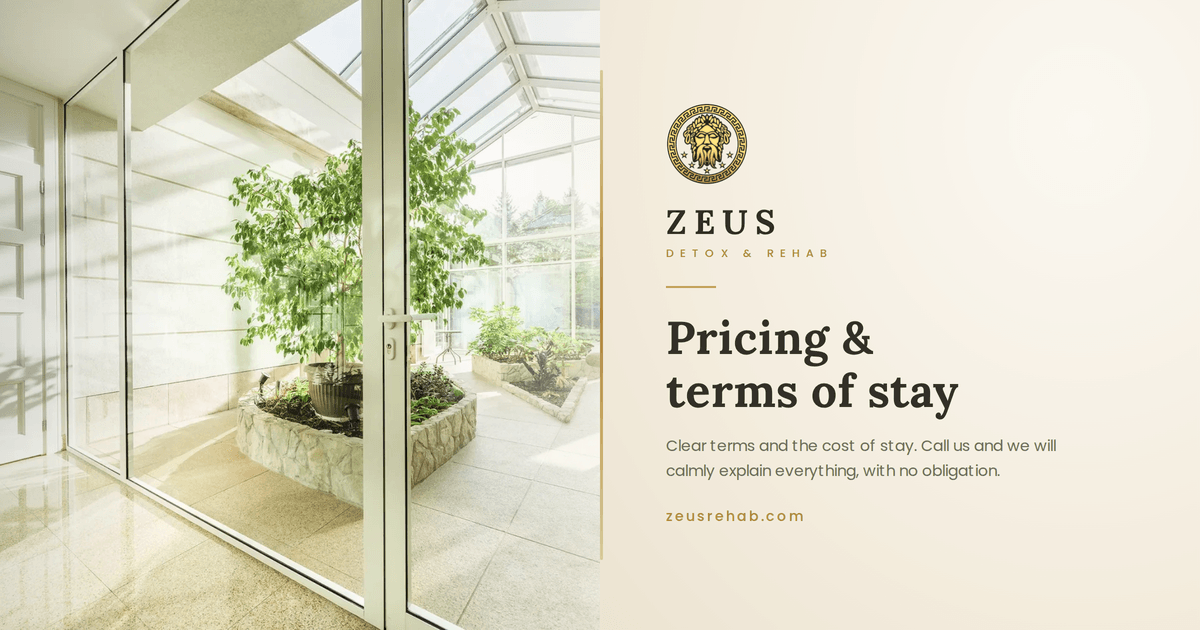
We publish the rates, because the question comes up in almost every first call. The price depends on the length of stay and the room. Prescription drug detox runs longer than an alcohol detox, so the reference point here is the fourteen and twenty-eight night rate rather than a nightly one.
| Room | 7 nights | 14 nights | 28 nights | 42 nights |
|---|---|---|---|---|
| Double | 4,800 EUR | 8,400 EUR | 16,900 EUR | 24,900 EUR |
| Single | 8,400 EUR | 16,800 EUR | 28,900 EUR | 42,900 EUR |
In US dollars, fourteen nights are 10,000 in a double room and 19,900 in a single, twenty-eight nights 20,050 and 34,350, and forty-two nights 30,050 and 51,250. The price covers accommodation, medical supervision, round-the-clock nursing and paramedic cover, medication, infusions, laboratory testing and meals. Higher room standards and rates in other currencies are on the pricing page. Therapy after detox is billed separately.
Prescription drug rehab abroad: why patients travel
Most people who write to us in English are not in Poland. With prescription medication the reasons for travelling differ from those with illicit drugs.
Distance from the prescriber
The supply here is not a dealer but a repeat prescription, sometimes several from different doctors. Being away makes topping up impossible in a way willpower cannot. That matters most in the first fortnight, when each reduction is felt.
A taper carried to the end
Outpatient reductions often stall, because a bad week means the dose goes back up and nobody is there to see it. An inpatient stay carries the schedule through to zero, with each step assessed rather than self-reported.
Privacy
Nobody at home is told. No local surgery, no shared waiting room, no note visible to a colleague. For patients whose dependence began with a legitimate prescription, this is usually the first question asked.
No waiting list
Admission is usually the same day, with no referral and no place on a list. The centre lies 25 minutes from Warsaw Chopin airport, a direct flight from most European capitals.
Detoxing from prescription drugs at home
We provide this as an inpatient programme only and do not make home visits for withdrawal from benzodiazepines, sleeping tablets or opioids. The reason is clinical, not logistical.
With alcohol the window of greatest risk sits within the first few days, and a single visit with an infusion can be enough. With sedatives, symptoms may not start until day four, and with long-acting preparations not until day seven. The reduction schedule then runs for weeks, and after every step somebody has to judge whether it was tolerated. That cannot be done in one visit, because there is nothing to administer: the drug is not being stopped, it is being stepped down.
Where the programme takes place
We run detoxification as an inpatient programme in Łomianki Dolne, 10 km from central Warsaw and 25 minutes from Chopin airport. Admission is preceded by a medical assessment with a review of every medication being taken. Once the taper is complete the patient moves on to therapy and to treatment of the anxiety, insomnia or pain that usually sits underneath the dependence, in the same place and with the same team.
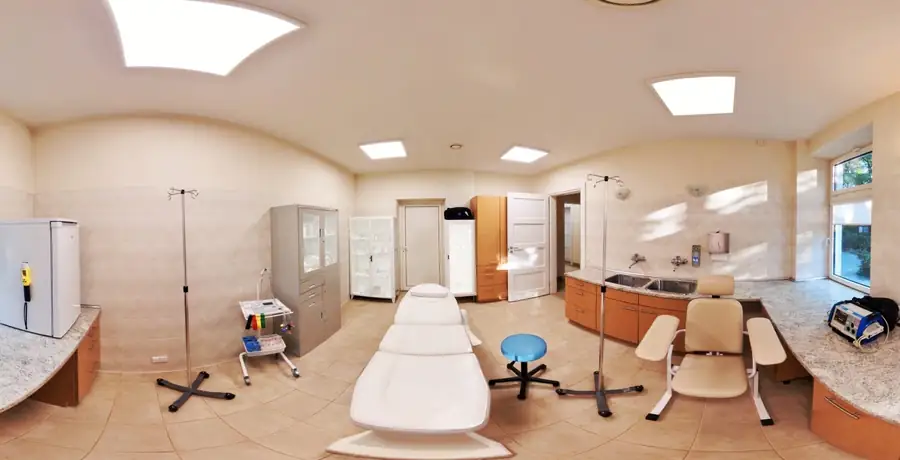


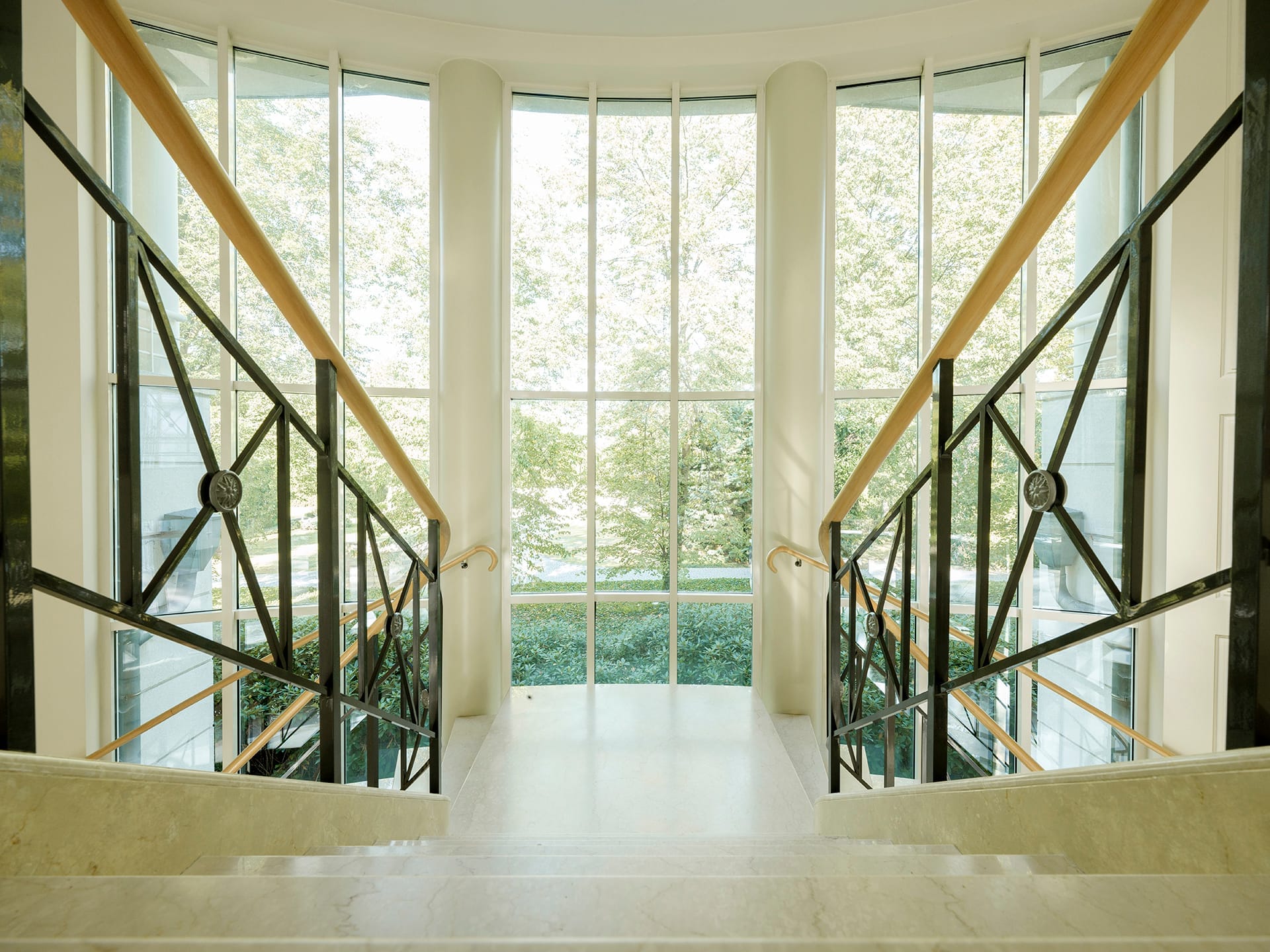

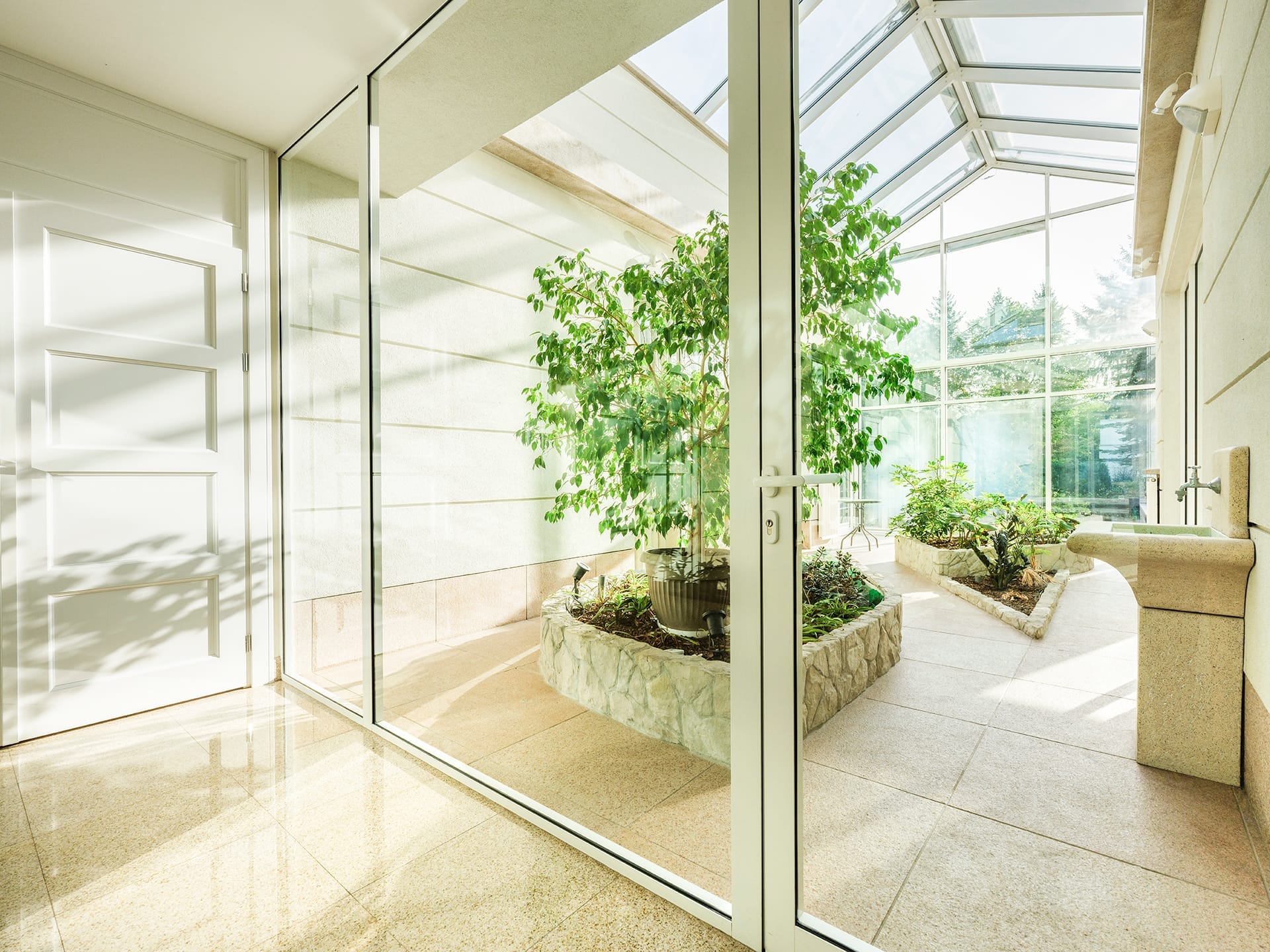
The clinical team works in eleven languages and the whole programme is available in English. We admit patients from Poland and from abroad, with no referral and no waiting list. Ten patients at most at any one time, which matters when every reduction schedule is written individually.
We also provide alcohol detox and drug detox. The team is listed on our staff.

When inpatient detox is the right step
Detox is indicated
Where dependence on prescribed medication needs medical supervision. Where previous attempts to reduce alone failed or produced severe symptoms. Where the risk of severe withdrawal is high. Where several preparations are being taken at once. Where stabilisation is needed before therapy can begin.
Detox is not enough
As the only form of treatment for the addiction. Where there are no withdrawal symptoms and no clinical indication, and an outpatient reduction is enough. Where the condition needs a psychiatric ward or intensive care. Where a fast stop is expected with no further work on anxiety, insomnia or pain.
Admission follows an individual clinical assessment covering coexisting illness, a review of every medication and any contraindication to particular reduction schedules. Where there is no response to pharmacological treatment or a risk to life, a patient may be transferred to hospital care at a higher level; the clinical team decides. Coexisting psychiatric illness is covered in dual diagnosis treatment.
What the programme includes
- medical assessment, a full medication history and a risk assessment before admission
- medical supervision of the whole reduction
- a nurse and a paramedic on site around the clock
- an individual reduction schedule, adjusted as it goes
- a switch to a long-acting preparation where that is indicated
- monitoring of vital signs and of withdrawal severity
- laboratory testing and assessment of liver and kidneys as indicated
- rehydration and correction of electrolyte balance
- medically indicated symptom relief, including for insomnia and anxiety
- assessment of coexisting anxiety, depression and chronic pain
- psychological support from the first days, not only after detox
- carrying the reduction through to the end, meaning to no medication at all
- a plan for treatment of the addiction once the taper is complete
What prescription drug detox will not do
A mismatch of expectations is a common reason patients are back on a prescription within weeks. A few things are worth knowing in advance.
- it does not treat addiction; it removes physical dependence, it does not change why the medication was being taken
- it does not cure insomnia or anxiety, which have to be treated separately and by other means
- it does not remove chronic pain; with opioids a plan for managing pain without them is needed
- it does not end with the last dose; anxiety, insomnia and sensory sensitivity can persist for weeks
- it does not work once and for all; with benzodiazepines every further unsupervised stop is more dangerous than the last
- it is not quick, and should not be; speeding up a reduction to shorten a stay is the commonest cause of relapse
What treatment aims at once the taper is finished is set out in prescription drug therapy after detox.
Questions about prescription drug detox
How long does it take to detox your body from medications?
As long as it takes to bring the dose to zero, because we carry the taper through to the end in the centre. The starting dose and the length of use decide: usually 14 to 28 nights, and 42 where doses are high, use has run for years, or dependence is mixed between opioids and benzodiazepines. With opioid painkillers the acute phase falls within 5 to 10 nights, so stays tend to be shorter than with sedatives.
What medication is used to detox from drugs?
With benzodiazepines and sleeping tablets the main tool is the drug itself, given on a reducing schedule, often after switching to a longer-acting preparation. Alongside that, symptom relief is prescribed for insomnia, anxiety, nausea and pain, and monitored against blood pressure, pulse and level of consciousness. With opioids, treatment reduces the severity of withdrawal. Everything is prescription-only and chosen after examination, never from a general rule.
How to flush out your body from drugs?
Nothing speeds up how fast the liver and kidneys clear a drug, and with prescribed medication that is not the aim anyway. Clearing the substance faster is precisely what causes the danger: with benzodiazepines an abrupt fall in blood level is what triggers seizures. The work is the opposite, a controlled and gradual reduction. Products sold as flushes or detox kits are aimed at drug testing and have no role here.
What removes drugs from the body?
The liver and kidneys, at their own pace. Medical treatment does not change that pace; it makes the period safe to pass through. That means observation during the windows where risk actually sits, rehydration and correction of electrolytes, replacement of deficiencies, and symptom relief under monitoring. With sedatives it also means keeping the drug present, at a falling dose, until the schedule reaches zero.
Is it safe to stop prescription medication suddenly?
With benzodiazepines and Z-drug sleeping tablets, usually not. An abrupt stop can cause seizures, delirium and acute psychiatric destabilisation, and the risk grows with every unsupervised attempt. With opioid painkillers, stopping rarely threatens life but is very hard to tolerate and leads to dehydration and a return to the drug. Nothing on this page should be used to change a dose without medical advice.
How long does benzodiazepine withdrawal last?
Usually 14 to 28 nights, and 42 at high doses or after years of use. We carry the taper to a complete stop, so the length of stay follows the dose rather than the calendar. Symptoms begin 1 to 4 days after short-acting preparations and up to 7 days after long-acting ones. Anxiety, insomnia and sensitivity to sound and light settle most slowly.
How much does prescription drug detox cost?
Fourteen nights are 8,400 EUR in a double room and 16,800 EUR in a single; twenty-eight nights 16,900 and 28,900 EUR; forty-two nights 24,900 and 42,900 EUR. Seven nights, where that is enough, are 4,800 and 8,400 EUR. Dollar rates and higher room standards are on the pricing page.
Can I taper off benzodiazepines at home?
In many cases it is not safe. Benzodiazepines need a gradual reduction and a risk assessment, and attempts to stop alone can lead to seizures and psychiatric destabilisation. We provide this as an inpatient programme only and do not make home visits, because a reduction schedule cannot be delivered in a single appointment.
Which medications most often need detox?
Benzodiazepines such as alprazolam, diazepam, lorazepam and clonazepam; Z-drug sleeping tablets including zolpidem and zopiclone; and opioid painkillers from codeine and tramadol through to oxycodone and fentanyl. Increasingly also pregabalin, sold as Lyrica, Alzain, Axalid and Rewisca. What decides is loss of control over dosing and what happens on trying to stop, not the name of the preparation.
Will I leave still taking the medication?
No. The schedule is carried through to zero during the stay, so patients leave without the drug rather than with a prescription for a smaller tablet. That is exactly why the length is set by the dose and the history rather than fixed in advance, and why high doses mean 42 nights rather than 14.
Do I have to stop the medication before admission?
No, and with benzodiazepines it is actively unwise. Stopping alone a few days before travelling can bring symptoms on during the journey. The medication continues at the existing dose, and the reduction begins after assessment.
Can detox require hospital admission?
Yes. With severe neurological or psychiatric complications, seizures, delirium, no response to treatment or a risk to life, hospital care at a higher level may be necessary. The clinical team decides on the basis of the patient's condition at the time.
Is contact confidential?
Yes. Every stage is covered by medical confidentiality. We give information about a stay to nobody without the patient's written consent, family and employers included.
Detox is the first stage, not the whole of treatment
Once the taper is complete the clinical team plans what follows: therapy, treatment of the anxiety and insomnia underneath the dependence, and relapse prevention. A patient can continue in the same centre without changing place or team.
Prescription drug addictionThe whole process: assessment, detox, therapy, aftercare
02
Prescription drug therapyThe stage after detox: anxiety, insomnia and relapse
03
Benzodiazepine addictionTapering off prescribed sedatives over time
04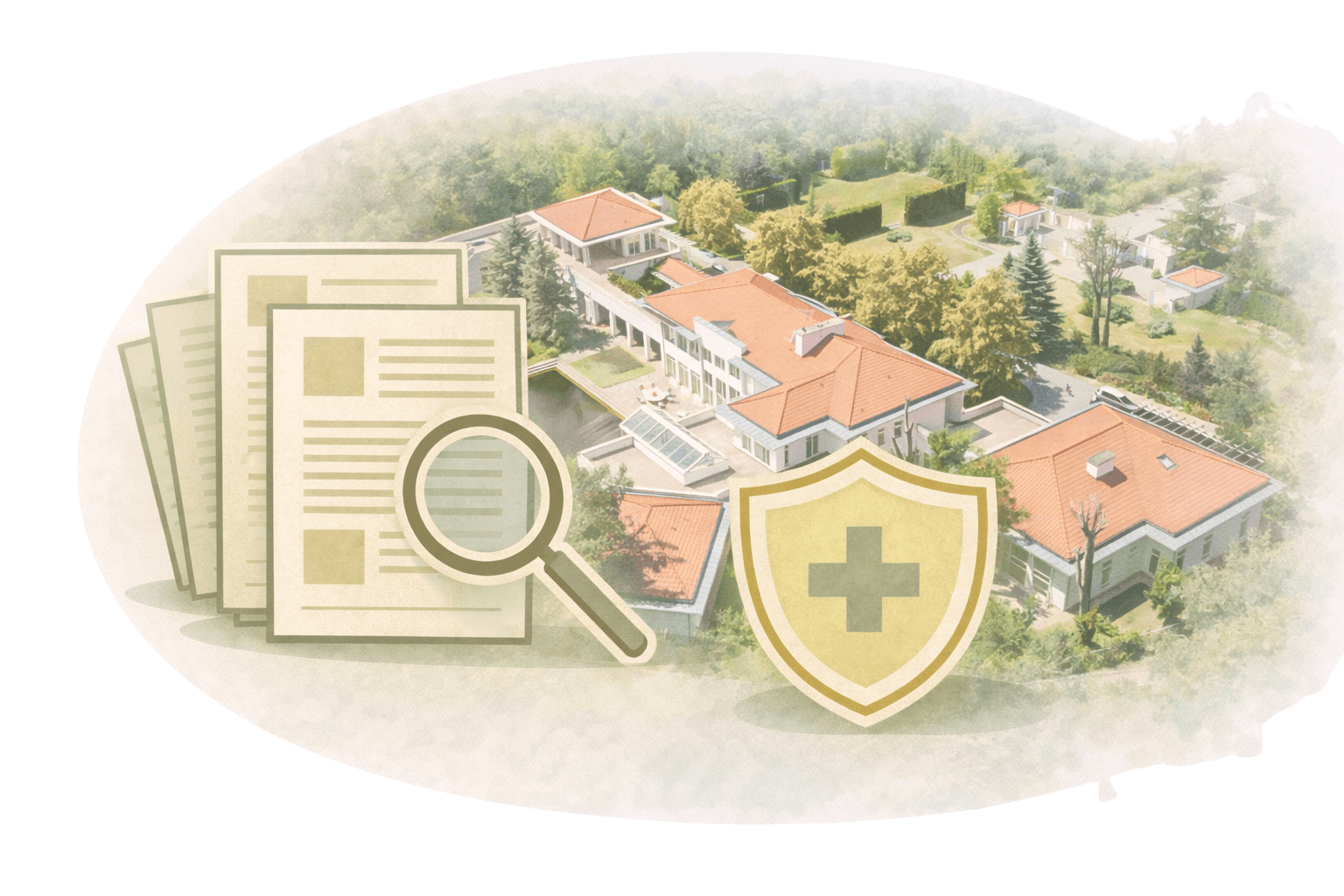
Z-drug sleeping tabletsZolpidem, zopiclone and zaleplon, a schedule of their own
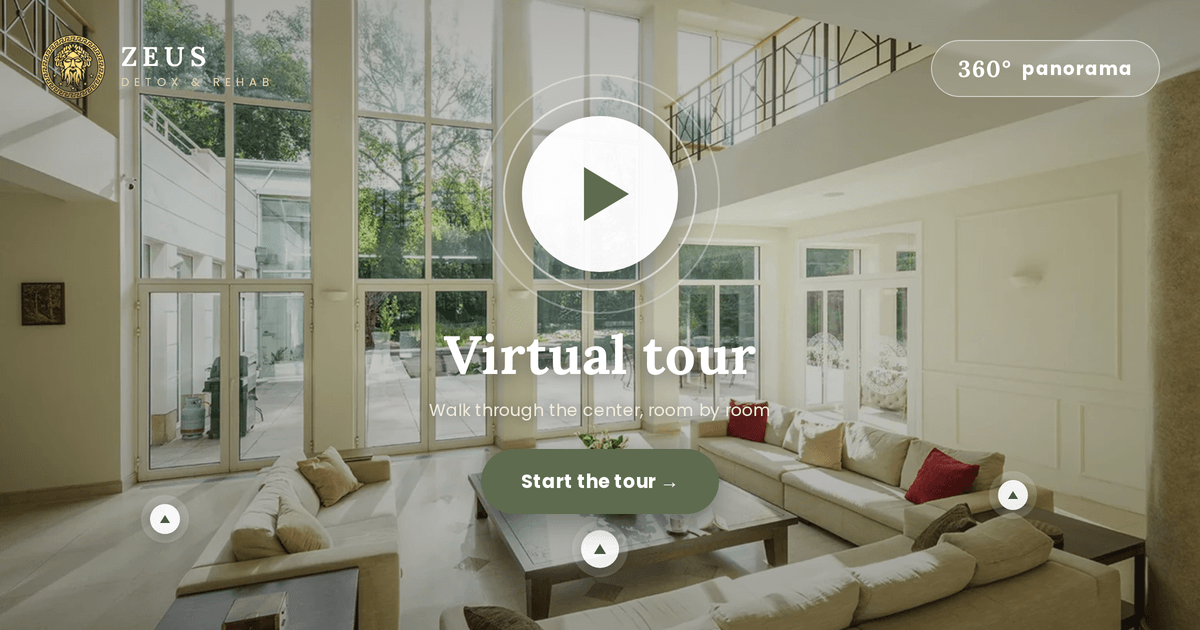
See the centre before you travel
Over a stay counted in weeks the surroundings matter more than they would for a short detox. Four pages worth opening during that conversation.
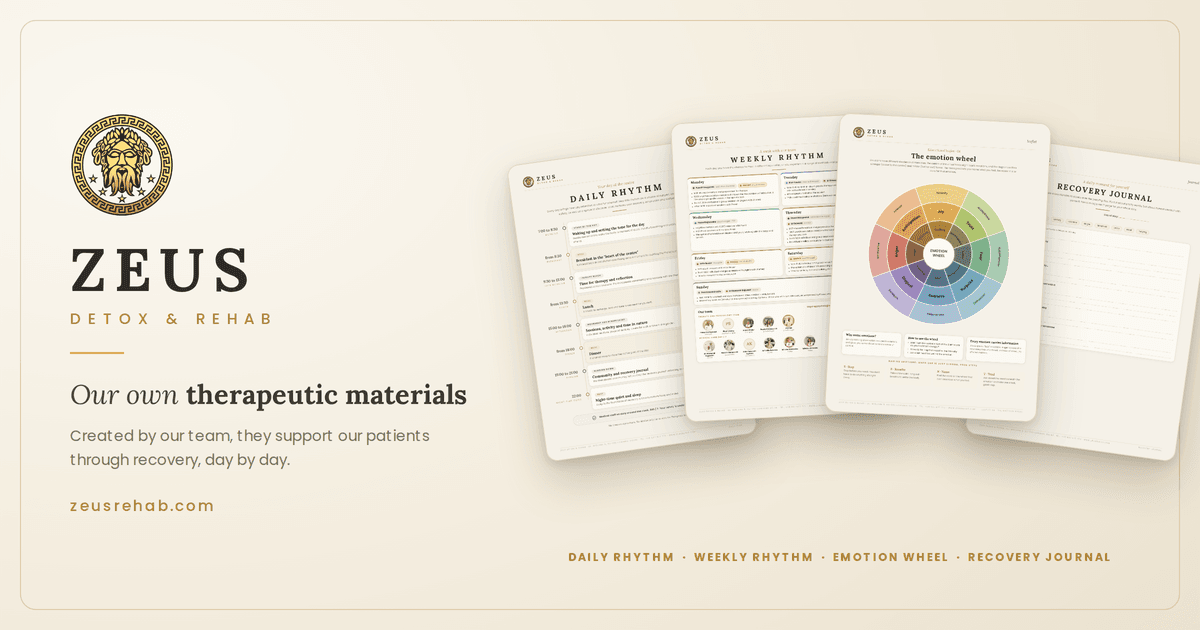

More on coming off prescribed medication
- Tapering: why the pace of reduction matters clinically
- Benzodiazepine withdrawal: seizure risk and medical emergency
- Benzodiazepine addiction in a high-functioning person
- How to recognise hidden use of benzos and sleeping tablets
- How to recognise addiction to Z-drug sleeping tablets
- Mixed addiction: benzos with alcohol or opioids
- Cognitive problems after benzos: memory, focus and recovery
- Relapse after benzodiazepines and how to reduce the risk
- Treatment and work: planning a safe return
- When hospitalisation becomes necessary
Scope of treatment and clinical responsibility
The information on this page is informational and educational. It is not medical advice, a diagnosis or an individual treatment plan. Brand names are given only to help readers identify what they are taking; listing a product does not mean that taking it leads to dependence. Decisions on admission, on the reduction schedule and on what follows are made by a doctor on the basis of a full clinical assessment.
The course of withdrawal, how long it lasts and the interventions used vary with the preparation, the dose, the length of use, general health and coexisting illness. Stopping medication with dependence potential without medical advice carries a risk of complications. No medication should be stopped or its dose changed on the basis of this page. The rates given are list prices and may change; the rates in force are on the pricing page. The model of care described applies to clinical practice in Poland.
Content author
Content on this site is prepared by the interdisciplinary team at Zeus Detox & Rehab, working with doctors, psychotherapists, clinical psychologists and nursing staff, on the basis of current medical knowledge and experience in inpatient addiction treatment.
 Clinical team
Zeus Detox & Rehab
Clinical team
Zeus Detox & Rehab
Medical review
Review covers medical and pharmacological content and the organisation of clinical supervision. Diagnostic and therapeutic decisions are always taken on the basis of an individual assessment of the patient's health.
 Dr Sławomir Rejowski
Lead doctor, Zeus Detox & Rehab
Dr Sławomir Rejowski
Lead doctor, Zeus Detox & Rehab
Clinical responsibility
Final responsibility for the consistency of this content with current treatment standards and clinical practice rests with the medical director of Zeus Detox & Rehab.
 Andrzej Kulesza
Medical director, Zeus Detox & Rehab
Andrzej Kulesza
Medical director, Zeus Detox & Rehab
Last medical update: 09/2026