


Drug detox
Drug detox is the medical stage of treatment, and its purpose is to carry a patient safely through withdrawal. We run it as an inpatient programme only, under medical supervision, with a nurse and a paramedic on site around the clock, at a centre outside Warsaw in Poland. It usually takes 10 to 14 nights, and 14 to 28 nights where benzodiazepines or sleeping pills are involved.
admission usually the same day
What drug detox involves
Drug detox is a medical process in which the body passes through withdrawal under observation. The symptoms arise because the nervous system has adapted to a substance being constantly present and is left dysregulated once it is removed. Drug detoxification, or medical detox, means monitoring those symptoms, assessing the risk of complications, and treating where treatment is indicated.
One thing separates it from alcohol detoxification: there is no single drug withdrawal timeline. Opioids, stimulants, benzodiazepines and cannabinoids produce different symptoms, different risks and different durations. So the first step is not an infusion. It is establishing exactly what was taken, in what doses and for how long.
Drug withdrawal symptoms
Withdrawal looks different for each group of substances, and in people who used several at once the pictures overlap. Severity depends on dose, duration of use, general health, coexisting illness and the number of previous withdrawals.
Physical symptoms
Muscle and joint pain. Chills alternating with sweating. Nausea, vomiting, diarrhoea, abdominal cramps. Runny nose and watering eyes. Raised heart rate and fluctuating blood pressure. Tremor. Disturbed sleep.
Psychological symptoms
Intense anxiety and restlessness. Irritability and outbursts of anger. Low mood and anhedonia. Difficulty concentrating. Intrusive thoughts about the substance, which keep returning in waves long after the physical symptoms have settled.
In severe cases
Seizures and delirium when benzodiazepines, sleeping pills or GHB and GBL are stopped. Psychosis after stimulants. Suicidal thinking during the mood crash. Dehydration and electrolyte disturbance after heavy vomiting and diarrhoea.
What raises the risk
Using several substances at once, above all opioids combined with benzodiazepines or alcohol. Previous seizures or delirium. Heart, liver or kidney disease. Coexisting psychiatric disorders. Living alone.
Urgent medical help is needed if any of the following appear during withdrawal:
- a seizure or loss of consciousness
- shallow or irregular breathing, or pinpoint pupils with no response to voice
- severe disorientation, delusions, signs of psychosis
- chest pain, palpitations, breathlessness
- persistent vomiting or diarrhoea with signs of dehydration
- high fever, muscle rigidity, altered consciousness
- thoughts of, or statements about, ending one's life
- suspected overdose
In those situations nobody should attempt treatment alone or wait for an assessment appointment. Call the emergency number immediately; across Europe, including Poland, that number is 112. We cover how to recognise an emergency in drug withdrawal symptoms.
How long does drug detox take
There is no single answer, because the time depends above all on what was being taken. Our programme usually runs 10 to 14 nights, and 14 to 28 nights with benzodiazepines and sleeping pills, because the dose is reduced gradually. Mixed dependence, most often opioids together with benzodiazepines, needs 42 nights, six weeks: tapering off benzodiazepines only begins once acute opioid withdrawal has passed. Clearing the substance from the body is faster than the symptoms settling: the drug leaves the blood in hours or days, the nervous system takes weeks to rebalance.
Worst in the first 24 to 72 hours
- onset 8 to 12 hours after short-acting opioids
- after methadone only at 24 to 48 hours, but then longer
- muscle and joint pain, abdominal cramps, vomiting, diarrhoea
- runny nose, watering eyes, goosebumps, dilated pupils
- chills alternating with sweats, insomnia, severe anxiety
- acute phase 5 to 10 nights, sleep and mood return later
The body recovers faster than the mood
- the first 24 to 72 hours bring exhaustion and many hours of sleep
- appetite returns after a period of having none at all
- between day 2 and day 10 the mood crashes and anhedonia sets in
- this, not any physical symptom, is the phase of highest suicide risk
- psychosis after amphetamine and methamphetamine can persist longer
- cocaine withdrawal follows the same shape, with the crash arriving sooner
- sleep and mood usually settle over 7 to 14 nights
The one group where stopping abruptly can kill
- symptoms start 1 to 4 days after short-acting preparations
- after long-acting ones, up to 7 days
- seizures and delirium are life-threatening emergencies
- the dose is reduced gradually, often after switching to a long-acting drug
- 14 to 28 nights inpatient, 42 with mixed dependence
- anxiety, insomnia and sensitivity to sound and light last longest
Peak between day 2 and day 6
- cannabis withdrawal begins 1 to 2 days after stopping
- irritability, aggression, tension, marked anxiety
- insomnia with unusually vivid dreams
- loss of appetite, sweating, chills, abdominal pain
- with synthetic cannabinoids the course is harsher, with vomiting and psychotic features
- usually 7 to 14 nights, sleep normalises last
The course also depends on how many previous attempts there have been and on physical health, so it differs from patient to patient. The benzodiazepine pattern in particular is set out in benzodiazepine withdrawal and seizure risk, and the cocaine pattern in cocaine detox.
How much does drug detox cost
We publish the rates, because the question comes up in almost every first call. The price depends on the length of stay and the room. A ten-night programme is billed between the seven and fourteen night rates.
| Room | 7 nights | 14 nights | 28 nights | 42 nights |
|---|---|---|---|---|
| Double | 4,800 EUR | 8,400 EUR | 16,900 EUR | 24,900 EUR |
| Single | 8,400 EUR | 16,800 EUR | 28,900 EUR | 42,900 EUR |
In US dollars, seven nights are 5,700 in a double room and 10,000 in a single, fourteen nights 10,000 and 19,900, twenty-eight nights 20,050 and 34,350, and forty-two nights 30,050 and 51,250. A single night is 850 EUR in a double room and 1,650 EUR in a single. The price covers accommodation, medical supervision, round-the-clock nursing and paramedic cover, medication, infusions, laboratory testing and meals. Higher room standards and rates in other currencies are on the pricing page. Therapy after detox is billed separately.
Drug rehab abroad: why patients travel to us
Most people who contact us in English are not in Poland. They come from the United Kingdom, Ireland, Scandinavia and the Middle East, and the reasons repeat.
Distance from supply
The strongest clinical argument for detoxification abroad. Dealers, using friends and familiar places stay behind. In the first two weeks, when cravings are at their sharpest, physical distance does work no willpower can do.
No waiting list
Admission is usually the same day. There is no referral, no assessment queue and no place on a list. For someone who has just decided to stop, the interval between the decision and the admission is the whole problem.
Privacy
Nobody at home is told. No local clinic, no shared waiting room, no colleague met in a corridor. For patients with public roles this is usually the first question asked, before cost or method.
Cost and accessibility
Private inpatient detoxification in Poland costs a fraction of British or Scandinavian rates at the same clinical standard. The centre lies 25 minutes from Warsaw Chopin airport, which is a direct flight from most European capitals.
Drug detox at home: why we do not provide it
Drug detox at home is one of the most searched phrases on this subject, usually alongside a question about cost. The answer is direct: we provide detoxification as an inpatient programme only and we do not make home visits for withdrawal from drugs. The reason is clinical, not logistical.
With alcohol, the window of greatest risk sits within the first few days. With drugs it is spread out and it moves. With opioids the first three days are the hardest, but vomiting and diarrhoea continue longer and lead to dehydration. With stimulants the risk appears only in the second week, when the mood crashes. With benzodiazepines symptoms may not start until day four, and the dose has to come down over weeks under supervision. None of those windows can be covered by one visit and one infusion.
Drug detox medication: what it does and what it does not replace
What medication does
It reduces the severity of withdrawal: pain, nausea, tremor, anxiety, agitation and insomnia. With benzodiazepines it makes a controlled taper possible in the first place. Everything is given on prescription and monitored against blood pressure, pulse and level of consciousness.
What infusions do
They rehydrate, correct the electrolytes lost through vomiting and diarrhoea and replace nutritional deficiencies. An infusion takes a few hours and brings clear relief, which is why it is often mistaken for the whole of detoxification.
What neither will do
Nothing shortens withdrawal or removes its cause. With benzodiazepines no infusion substitutes for a gradual dose reduction, and with stimulants nothing changes the mood crash in the second week, which is the real danger in that group.
Detox drinks and kits
Products sold as detox drinks, kits or flushes are aimed at drug testing, not at withdrawal. They do not change how fast the liver and kidneys clear a substance and they have no effect on the course of withdrawal. They are a different product for a different purpose.
Where the programme takes place
We run detoxification as an inpatient programme in Łomianki Dolne, 10 km from central Warsaw and 25 minutes from Chopin airport. Admission is preceded by a medical assessment. Once detox is finished a patient can move straight into therapy without changing place or team, which matters more with drugs than with anything else: it is in the gap between the two that cravings return and tolerance falls.
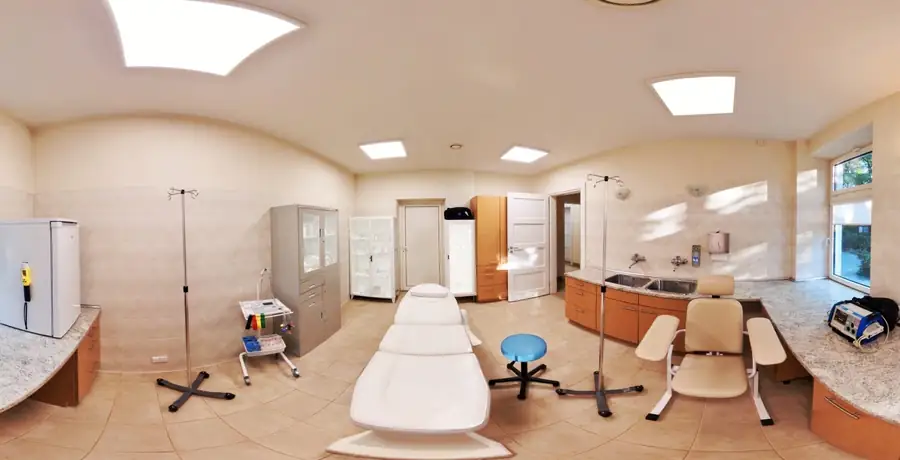


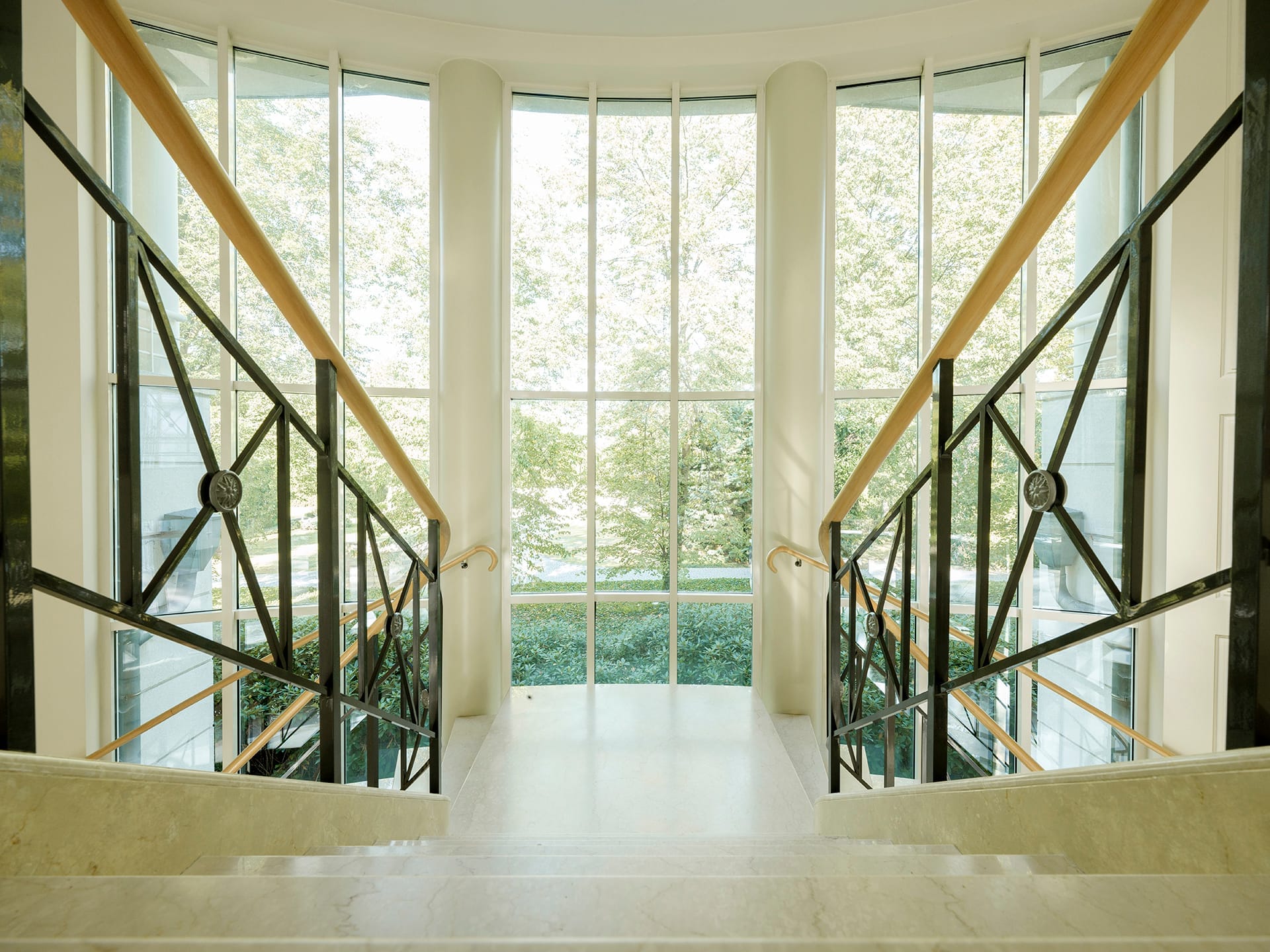

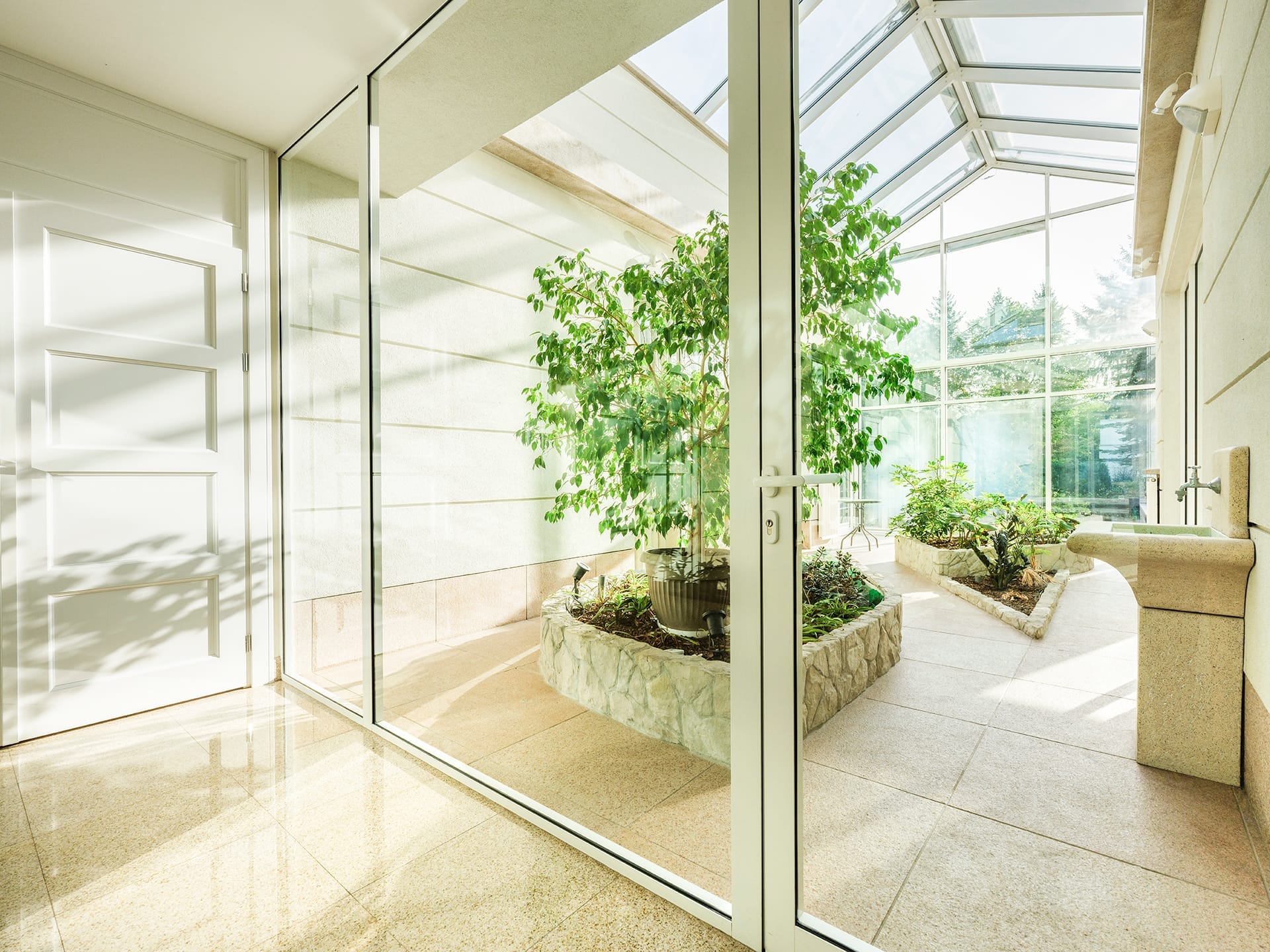
The clinical team works in eleven languages and the whole programme is available in English. We admit patients from Poland and from abroad, with no referral and no waiting list. Ten patients at most at any one time, which in drug withdrawal means every patient can genuinely be observed as an individual.
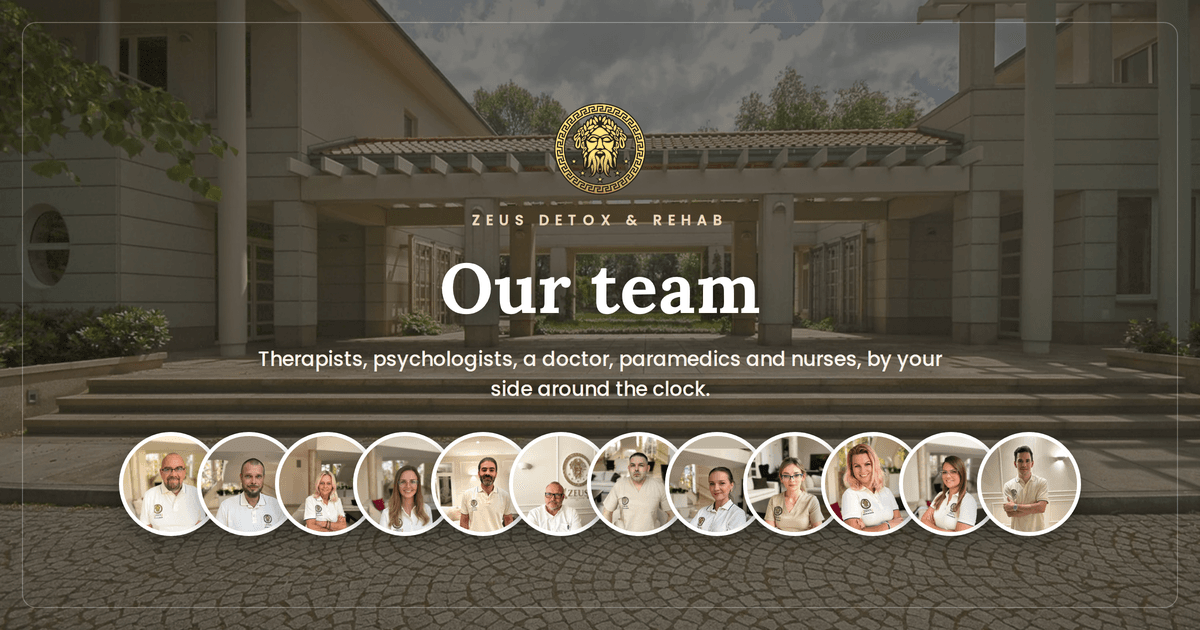
We also provide alcohol detox and prescription drug detox, including controlled benzodiazepine tapering. The team is listed on our staff.

When inpatient drug detox is the right step
Detox is indicated
Where dependence on a psychoactive substance is diagnosed or suspected. Where previous attempts to stop alone failed or produced severe symptoms. Where several substances are being used at once. Where benzodiazepines or sleeping pills are involved and the reduction has to be spread over time. Where stabilisation is needed before therapy can start.
Detox is not enough
Where there are no withdrawal symptoms and no clinical indication. Where the expectation is a short intervention with no readiness for what follows. Where the condition needs intensive care or a psychiatric ward. Where immediate results are expected without any further therapeutic work.
Admission follows an individual clinical assessment. With acute stimulant psychosis, delirium, seizures or no response to pharmacological treatment, a patient may be transferred to hospital care at a higher level; the clinical team decides on the basis of the current assessment. Coexisting psychiatric illness is covered in dual diagnosis treatment.
What the drug detox programme includes
- medical assessment, a full list of substances used and a risk assessment before admission
- medical supervision of the whole detoxification
- a nurse and a paramedic on site around the clock
- monitoring of vital signs and of withdrawal severity
- laboratory testing and assessment of liver, kidneys and heart as indicated
- rehydration and correction of electrolyte balance
- assessment of nutritional state and replacement of deficiencies
- a gradual dose reduction where benzodiazepines and sleeping pills are involved
- medically indicated relief of symptoms, including pain, nausea, anxiety and insomnia
- suicide risk assessment during the mood crash after stimulants
- screening for coexisting psychiatric disorders
- a plan for the next stage of treatment
What drug detox will not do
A mismatch of expectations is a common reason patients return to use within weeks of finishing. A few things are worth knowing in advance.
- it does not treat addiction; it removes the substance and stabilises the body, it does not change the mechanisms behind the use
- it does not end when the tests come back clean; cravings return in waves for many weeks
- it does not replace therapy or the later work on preventing relapse
- it does not reverse damage to the heart, liver and nervous system, which has to be managed separately
- it does not protect against overdose on returning to opioids; after withdrawal tolerance falls, and a dose once tolerated can be a fatal one
- it does not work once and for all; with benzodiazepines every further unsupervised withdrawal is more dangerous than the last
Where opioids and benzodiazepines were used together, the clinical picture is different again and is set out in mixed addiction: benzos with alcohol or opioids.
Questions about drug detox
How long does it take for a body to detox from drugs?
Clearing the substance is faster than recovering from it. Stimulants and short-acting opioids leave the blood within 1 to 3 days, cannabinoid metabolites can stay in urine for weeks in regular users, and long-acting benzodiazepines for longer still. A clean test does not mean withdrawal is over: sleep, appetite and mood keep settling for another 2 to 6 weeks. Our inpatient programme runs 10 to 14 nights, or 14 to 28 with sedatives.
When do withdrawal symptoms start?
It depends entirely on the substance. After short-acting opioids, 8 to 12 hours; after methadone, 24 to 48. After stimulants the exhaustion comes within a day but the mood crash only between day 2 and day 10. After short-acting benzodiazepines, 1 to 4 days, and after long-acting ones up to 7. After cannabis, 1 to 2 days, peaking between day 2 and day 6.
What helps in detoxification of drugs?
Observation through the windows where the risk actually sits, rehydration and correction of electrolytes, replacement of deficiencies, and symptom relief monitored against blood pressure, pulse and level of consciousness. With benzodiazepines, a gradual dose reduction rather than an abrupt stop. Nothing speeds up how fast the liver and kidneys clear a substance, so the aim of treatment is to make the time pass safely, not to shorten it.
What vitamins help detox the body from drugs?
Vitamins correct deficiencies caused by months of poor eating; they do not remove drugs and do not shorten withdrawal. Which ones are needed is decided from blood results, not from a general rule. Where alcohol was also involved, thiamine matters and has to be given before glucose. No supplement changes the risk of seizures, dehydration or a mood crash.
How much does drug detox cost?
Seven nights are 4,800 EUR in a double room and 8,400 EUR in a single; fourteen nights 8,400 and 16,800 EUR; twenty-eight nights 16,900 and 28,900 EUR; forty-two nights 24,900 and 42,900 EUR. A single night is 850 EUR in a double and 1,650 EUR in a single. Dollar rates and higher room standards are on the pricing page.
Does drug detox treat addiction?
No. Detox is a stage of medical stabilisation and symptom control. Treating the addiction requires drug addiction therapy and work on the mechanisms behind the use. The gap between detox and therapy carries the highest risk of return to use, which is why we keep both in the same place.
Can drug detox be done at home?
We provide detoxification as an inpatient programme only and do not make home visits for withdrawal from drugs. The windows of risk are spread over a fortnight, and over several weeks with benzodiazepines, so one visit and one infusion do not cover them. Stopping benzodiazepines, sleeping pills or GHB and GBL abruptly can cause seizures and delirium.
What is the difference between detox and rehab?
Detox is the medical stage: getting through withdrawal safely. Rehab is what follows: therapy, treatment of coexisting psychiatric illness and relapse prevention. Detoxification usually takes days to weeks, the therapeutic stage months. Neither replaces the other, and doing only the first is the most common reason people return to use.
Do detox drinks and kits work?
Products marketed as detox drinks, kits or flushes are aimed at drug testing, not at withdrawal. They do not change how quickly the body clears a substance and have no effect on withdrawal symptoms or on the risk of complications. Medication used in detoxification is prescription-only and given under monitoring.
Do I have to stop using before admission?
No. Detoxification is about the withdrawal period itself, so having a substance in the body on arrival does not prevent treatment starting. Stopping alone a few days before travelling can in fact be dangerous, especially with benzodiazepines. The clinical team decides how to proceed after assessing the patient.
Can you come from another country?
Yes. Most of our English-speaking patients travel in, and the centre is 25 minutes from Warsaw Chopin airport. No referral is needed and admission is usually the same day. Anyone in acute benzodiazepine withdrawal or with unstable cardiac or respiratory problems should be assessed locally before flying, not after.
Can detox require hospital admission?
Yes. With delirium, seizures, stimulant psychosis, acute psychiatric destabilisation or no response to pharmacological treatment, hospital care at a higher level may be necessary. The clinical team decides on the basis of the patient's condition at the time.
Is contact confidential?
Yes. Every stage is covered by medical confidentiality. We give information about a stay to nobody without the patient's written consent, family and employers included.
Detox is the first stage, not the whole of treatment
After stabilisation the clinical team plans what follows: therapy, treatment of coexisting psychiatric illness and relapse prevention. A patient can continue in the same centre without changing place or team.
Drug addiction treatmentThe whole process: assessment, detox, therapy, aftercare
02
Drug addiction therapyThe stage after detox, working on mechanisms and relapse
03
Benzodiazepine addictionTapering off prescription sedatives over time
04
Dual diagnosisAddiction alongside depression, anxiety or psychosis
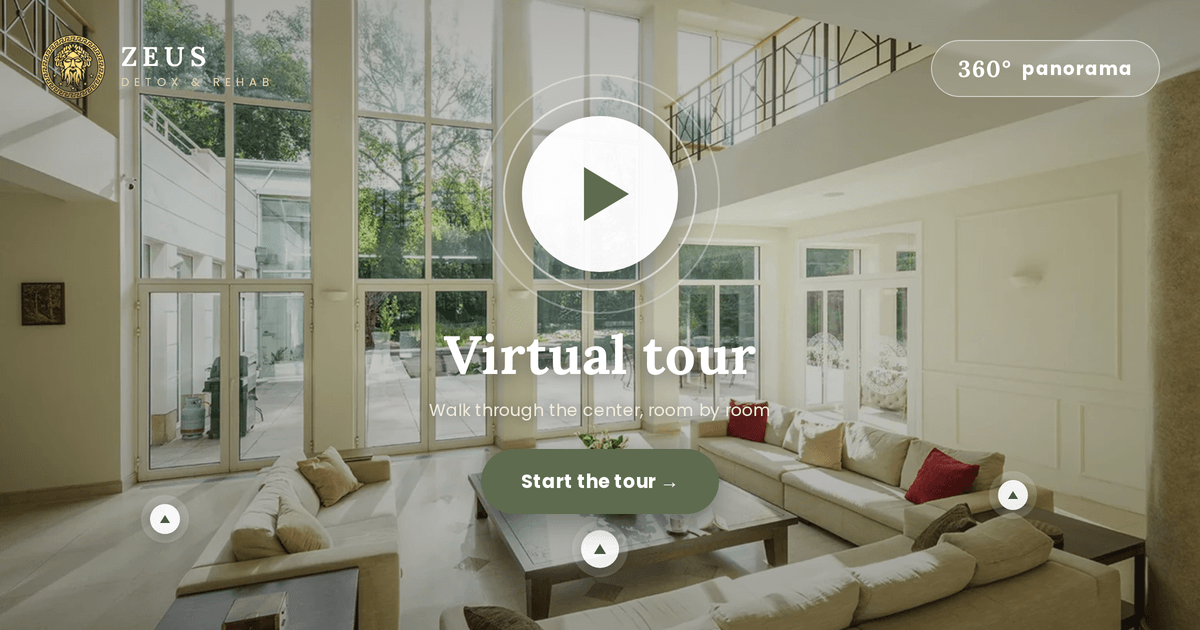
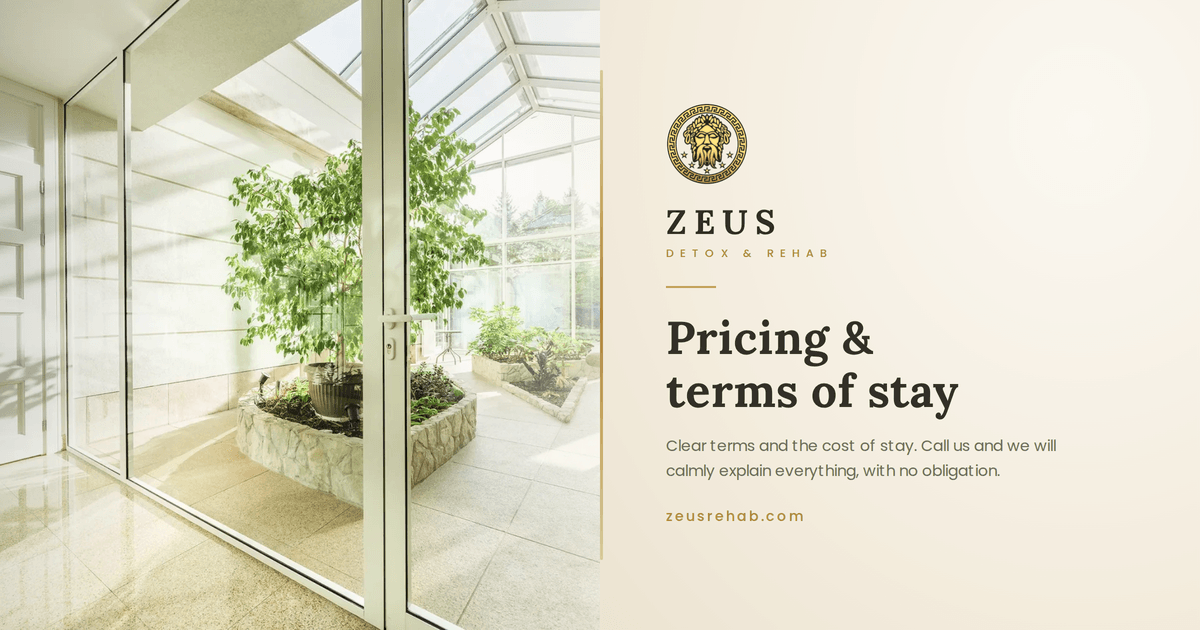
See the centre before you travel
The decision is usually made within hours. Four pages worth opening during that conversation.
More on withdrawal from drugs
- Drug withdrawal symptoms: opioids, cocaine, sedatives
- Cocaine detox and when stabilisation is needed
- Benzodiazepine withdrawal: seizure risk and medical emergency
- Tapering: why the pace of reduction matters clinically
- Mixed addiction: benzos with alcohol or opioids
- When outpatient treatment is not enough
- Z-drugs and safety: when symptoms need urgent assessment
Scope of treatment and clinical responsibility
The information on this page is informational and educational. It is not medical advice, a diagnosis or an individual treatment plan. Decisions on admission to detoxification, the scope of medical supervision and what follows are made by a doctor on the basis of a full clinical assessment.
The course of withdrawal, how long it lasts and the interventions used vary with the substance, the dose, the duration of use, general health, coexisting illness and individual response. Withdrawing from psychoactive substances without medical advice carries a risk of complications. The rates given are list prices and may change; the rates in force are on the pricing page. The model of care described applies to clinical practice in Poland.
Content author
Content on this site is prepared by the interdisciplinary team at Zeus Detox & Rehab, working with doctors, psychotherapists, clinical psychologists and nursing staff, on the basis of current medical knowledge and experience in inpatient addiction treatment.
 Clinical team
Zeus Detox & Rehab
Clinical team
Zeus Detox & Rehab
Medical review
Review covers medical and pharmacological content and the organisation of clinical supervision. Diagnostic and therapeutic decisions are always taken on the basis of an individual assessment of the patient's health.
 Dr Sławomir Rejowski
Lead doctor, Zeus Detox & Rehab
Dr Sławomir Rejowski
Lead doctor, Zeus Detox & Rehab
Clinical responsibility
Final responsibility for the consistency of this content with current treatment standards and clinical practice rests with the medical director of Zeus Detox & Rehab.
 Andrzej Kulesza
Medical director, Zeus Detox & Rehab
Andrzej Kulesza
Medical director, Zeus Detox & Rehab
Last medical update: 09/2026